
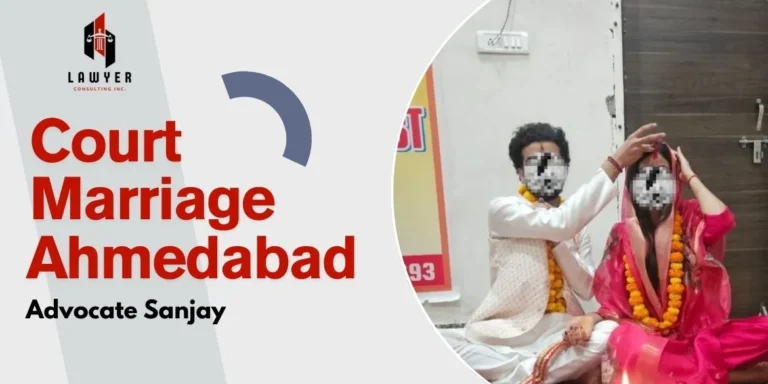
A surprising fact: over 30% of urban marriages now take place in court.
The court marriage system in Ahmedabad gives couples a simple legal path instead of traditional ceremonies. The whole process takes about 30-45 days to complete. The Special Marriage Act, 1954 governs these marriages, making them perfect for interfaith or inter-caste couples. People who prefer non-religious ceremonies or face family resistance also choose this option. The Indian Constitution’s Article 21 protects everyone’s right to marry their chosen partner.
The process might look complex at first, but court marriages in Gujarat are quite affordable. The total cost runs between ₹1,500 to ₹5,000. Getting help from an experienced court marriage lawyer can make things much easier. To cite an instance, see how some lawyers have achieved success rates above 95% in these cases.
This piece will guide you through each step of getting married in court in Ahmedabad. We’ll cover everything from paperwork to possible hurdles and show you the quickest way to complete your registry marriage without stress.
Understanding Court Marriage in Ahmedabad
Court marriage is a legal union that happens under a marriage officer’s supervision, usually a Sub-Registrar appointed under specific acts. People in Ahmedabad are choosing this option more because it’s simple and works for everyone.
What makes court marriage different from traditional marriage
The main difference between court and traditional marriages in Ahmedabad comes down to the basics. Court marriages take place at a courthouse or government office with minimal ceremonies. Traditional weddings involve many rituals and customs, while court marriages stick to legal requirements.
Court marriages stand out because they’re secular. They work without any religious customs, which makes them available to couples whatever their faith or cultural background. This approach will give a fair chance to all couples who want their marriage recognized under Indian law.
The money you spend on court marriages in Gujarat is nowhere near what traditional weddings cost. Court marriages only cost ₹1,500 to ₹5,000. Traditional ceremonies can set you back several lakhs. Reports show Indian weddings typically cost between ₹5 lakhs to ₹50 lakhs. This is a big deal as it means that court marriages save you money.
Court marriages in Ahmedabad have these features:
- Legal focus: Legal requirements matter more than cultural traditions
- Efficient process: Everything wraps up in 30-45 days
- Documentation-centric: You get legal papers needed for visas, joint bank accounts, and property matters
The ceremony happens before a Marriage Registrar and witnesses, without traditional rituals. This is quite different from traditional weddings with their elaborate functions and religious ceremonies.
Who should think over court marriage
Court marriage in Ahmedabad works great for different groups of people based on their situation and what they want. Interfaith or inter-caste couples find it helpful since it bypasses religious or caste restrictions. In the last decade, interfaith marriages grew by 10-12%, showing more people need this option.
Couples who don’t want religious ceremonies pick court marriage as their secular choice. This appeals to people with secular views who’d rather keep religion out of their union.
Court marriage helps people whose families or communities oppose their partner choice. The legal system protects couples from social pressure, letting them marry despite opposition. About 25-30% of court marriages involve couples facing family resistance.
People who want things done quickly choose court marriages. The process beats traditional weddings in speed and simplicity. Couples get legal recognition and protection with minimal paperwork.
These people should also think about court marriage:
- Couples who want to avoid wedding expenses and debt
- People looking for a private ceremony
- NRIs coming back to India for marriage papers
- Those needing protection from forced marriages through consent requirements
Court marriage in Ahmedabad helps people who value simplicity, legal protection, and secular values. The process breaks through religious and social barriers, letting couples focus on their relationship instead of complex ceremonies.
Eligibility Criteria for Court Marriage
The Special Marriage Act of 1954 sets specific eligibility requirements to register a court marriage in Ahmedabad. These legal requirements protect both parties and make sure the marriage stands valid in court.
Minimum age and mental capacity
The law’s main goal focuses on age requirements for court marriages in Ahmedabad. Men need to be 21 years old while women must be 18 years old when they marry. This rule applies to everyone in Gujarat regardless of their religion or community.
Mental capacity is a vital part of marriage eligibility. Both parties should be mentally sound to give valid consent. The law states that neither person should:
- Lack the mental capacity to give valid consent
- Have mental disorders that make them unfit for marriage and having children
- Experience recurring bouts of insanity
Mental capacity serves as the life-blood of any marriage contract. Both people must understand what marriage means and what responsibilities come with it. This rule helps protect people who might not fully grasp the commitment or could be forced into marriage against their interests.
Consent and relationship restrictions
Mutual consent forms the foundations of court marriages in Ahmedabad. Both parties must agree to marry freely without force or pressure. Marriage officers check this consent carefully during registration to ensure everything’s legitimate.
The law also restricts marriages between close relatives. People wanting to marry shouldn’t fall under the “degrees of prohibited relationship” defined by law. All the same, there’s one exception: if either party’s customs allow such marriages, they can proceed despite the relationship restrictions.
Neither person should have a living spouse when applying for court marriage. People who were married before must show proof of divorce or their former spouse’s death certificate. This rule prevents multiple marriages and protects the marriage bond.
Special rules for foreign nationals
Foreign nationals face extra requirements when seeking court marriage in Ahmedabad. They must live in India for at least 30 days before giving notice of marriage.
Foreign nationals also need to submit:
- Valid passport and visa papers
- Proof they lived in India for the required 30 days
- No Objection Certificate (NOC) from their embassy confirming their marital status
Marriages in Jammu and Kashmir need both parties to be Indian citizens living in areas where the Special Marriage Act applies. This rule significantly affects couples with international backgrounds.
Non-Resident Indians (NRIs) face similar document requirements as foreigners, though citizenship rules might differ. Couples dealing with international elements should talk to an Ahmedabad court marriage lawyer who knows about cross-border marriages.
These eligibility criteria help build legal certainty and protect individual rights. Meeting these requirements lets couples move forward confidently with their court marriage in Gujarat.
Legal Acts Governing Court Marriage
The legal system for court marriage in Ahmedabad works through various laws that guide the process based on religious beliefs and personal situations. These laws set out the steps, requirements, and legal effects for couples who want to get married in Gujarat.
Special Marriage Act, 1954
The Special Marriage Act (SMA) of 1954 is the life-blood of court marriages in Ahmedabad, especially when you have couples from different faiths. This Act offers a non-religious framework for marriage registration, no matter what religion the couples follow. Couples can get married without changing their faith, which makes this Act valuable in our diverse society today.
The Act treats marriage as a civil contract instead of a religious ceremony. Couples need to submit a Notice of Intended Marriage to their district’s Marriage Registrar where at least one person has lived for 30 days or more. A 30-day waiting period follows to let people raise any objections.
The Special Marriage Act’s main rules include:
- No multiple marriages allowed
- Both parties must be mentally sound to give valid consent
- Age limits (21 for males, 18 for females)
- No marriages between close relatives unless customs allow it
The marriage becomes official when a Marriage Officer and three witnesses are present. The marriage certificate proves the union conclusively.
Hindu Marriage Act, 1955
The Hindu Marriage Act of 1955 works alongside the Special Marriage Act and applies to Hindu marriages in Ahmedabad. This Act covers not just Hindus but also Buddhists, Jains, and Sikhs. It brought unity to marriage laws across different Hindu communities.
The Hindu Marriage Act is different from the Special Marriage Act in key ways. While SMA is purely civil, this Act allows religious ceremonies following traditional customs. Yet, it enforces similar rules about single marriage, age requirements, and family relationship restrictions.
Hindu couples in Ahmedabad often choose to have a quick religious ceremony at an Arya Samaj temple before registering their marriage under this Act. This takes just 3-4 hours, much faster than the SMA’s month-long wait.
Other religion-specific laws
Each faith has its own marriage laws in Ahmedabad.
Muslim couples follow Muslim Personal Laws. They complete their Nikah ceremony and sign a Nikah-Nama with a Kazi. Later, they can register their marriage in court for legal documentation.
Christian couples can marry under the Indian Christian Marriage Act of 1872. They have a church ceremony with a priest and two witnesses before court registration.
The Parsi Marriage and Divorce Act of 1936 guides Parsi marriages. It has specific rules for marriages within their community.
Couples from different faiths who want to get married in Ahmedabad usually need to use the Special Marriage Act. The Madras High Court has stressed that interfaith marriages should be registered under the Special Marriage Act to stay legal and valid.
These different laws show Gujarat’s steadfast dedication to supporting various religious practices while making sure all marriages are legally protected. Understanding which law applies helps couples direct their way through Ahmedabad’s court marriage process more smoothly.
Documents Required for Court Marriage
Documentation is the foundation of every court marriage in Ahmedabad. Your registration process’s timeline and smoothness depend on proper paperwork. You can save time and avoid delays by gathering all the needed documents beforehand.
Identity and address proof
The bride and groom must first prove their identity through government-issued documents. You can use an Aadhaar Card, PAN Card, Passport, Voter ID card, or Driving License. While you only need to submit one document, keep backups ready if the registrar asks for more verification.
To prove residence in Ahmedabad or Gujarat, couples can submit these documents:
- Aadhaar Card (if address is updated)
- Utility bills such as electricity, water, or gas bills
- Bank passbook with current address
- Passport with valid address
- Rent agreement (registered)
- Voter ID card
Both parties need to submit their current and permanent residence proof from before marriage. This verification helps the marriage registrar confirm proper jurisdiction over your case.
Age and marital status proof
The law requires males to be 21 and females 18 to marry. You can prove your age with these documents:
- Birth certificate (most preferred)
- School leaving certificate or Class 10 marksheet
- Passport
- Aadhaar Card with verified date of birth
- Doctor/CMO report in some cases
Both parties must submit a notarized affidavit about their marital status – unmarried, divorced, or widowed. The affidavit needs a non-judicial e-stamp paper worth Rs. 10/-.
Previously married individuals need extra documents:
- Divorce decree/order for divorced individuals
- Death certificate of spouse for widowed applicants
These papers help comply with Indian marriage laws’ monogamy requirements.
Witness documents and photos
Your court marriage in Ahmedabad needs three witnesses. Each witness must provide specific papers to fulfill their legal role.
Witnesses should have:
- Identity proof (same options as for the couple)
- Address proof showing Gujarat residence
- 2-3 passport-sized photographs
Adult witnesses should have no personal interest in the marriage. They sign the witness form and confirm the couple’s identity and marriage’s legitimacy.
Hindu Marriage Act registrations need two witnesses, while Special Marriage Act registrations require three. This reflects each act’s legal requirements.
Additional documents for foreigners
Foreign nationals or NRIs need extra papers for court marriage in Ahmedabad. Along with standard documents, they must have:
- Valid passport with appropriate visa
- Proof of India residence for at least 30 days before marriage notice
- No Objection Certificate (NOC) from their embassy about marital status
- Embassy certificate showing present marital status and nationality
Marriages between Indian citizens and foreigners need extra checks to follow both countries’ laws. This might make the process longer than regular court marriages between Indian citizens.
You should bring original documents with self-attested photocopies. Your passport-sized photos (5cm x 4.5cm or 2″ x 1.75″) should show your full face against a plain white background.
A court marriage lawyer in Ahmedabad can help you through these documentation requirements, especially in complex cases with foreigners or previously married individuals.
Step-by-Step Court Marriage Process in Ahmedabad
The court marriage procedure in Ahmedabad follows a clear process that takes about 30-45 days. You can start the official process once you have all your documents ready. Let me break down each stage for you.
Filing the notice of intended marriage
Your first step on this marriage trip starts with submitting a Notice of Intended Marriage to the Marriage Officer in Ahmedabad. You need to file this notice in the district where at least one of you has lived for 30 days or more. Your application should:
- Match the format in the Special Marriage Act’s Second Schedule
- List both parties’ personal details
- State your current marital status
- Confirm you’re not within prohibited relationships
- Have both your signatures
If you live in Gujarat, you can now submit this notice online through the e-Nagar portal. This makes the original application process much easier. You also have the option to submit your notice in person at the Marriage Registrar’s office in your district of residence.
30-day public notice period
The Marriage Officer will record and display your notice in their office for 30 days after receiving it. This waiting period serves two key purposes:
People can raise legal objections during this time. Both parties also get time to think about their decision.
The Marriage Officer keeps all notices in their records and adds them to the Marriage Notice Book. Anyone can check this book at reasonable hours. The Marriage Officer sends a copy to other districts for display if either party lives elsewhere.
Handling objections if any
Anyone can challenge the marriage during the 30-day notice period, but only on legal grounds. These grounds include:
- One person already being married
- Either person being underage
- The couple being too closely related
The Marriage Officer must break down and address any objections before moving forward. They have 30 days to complete this investigation. Either party can appeal to the district court within 30 days if the Officer supports the objection.
Legal guidance can be a great way to get help with complex cases that have objections. Call Advocate Sanjay Sharma at 8920242579 to get expert help with objections and ensure your court marriage goes smoothly.
Declaration and signing before registrar
Both parties must meet the Marriage Officer on the set date after the notice period ends without valid objections (or after resolving them). You’ll need:
- The bride and groom
- Three witnesses
- Original documents for verification
Both parties must formally declare their willingness to marry as stated in the Act’s Third Schedule during this meeting. They also confirm that all information provided is true. Both parties, three witnesses, and the Marriage Officer must sign this declaration.
Issuance of marriage certificate
The Marriage Officer gives you the marriage certificate right after the ceremony when all formalities are complete. Everyone present signs this certificate, which then goes into the Marriage Certificate Book.
Your marriage certificate proves your marriage conclusively and you’ll need it for passport applications, name changes, and inheritance claims. You can download it from the e-Nagar portal or pick it up from the office.
The process from application to getting your certificate typically takes 7-15 working days after meeting all requirements. The total time, including the notice period, usually runs between 30-45 days.
Role of a Court Marriage Lawyer in Ahmedabad
Legal guidance can make a huge difference in your court marriage experience in Ahmedabad. The law doesn’t require you to hire a lawyer, but professional legal help will change this complex process into a simple one.
Why legal help is useful
Court marriage lawyers provide valuable support even though it’s not legally required. They help you avoid common mistakes that couples make. An experienced lawyer becomes a vital part especially when you have interfaith or inter-caste marriages where families might object. They protect your rights and respond appropriately when someone objects during the notice period.
Court marriage lawyers in Ahmedabad prove most helpful with:
- Documentation issues that could delay or stop the process
- Family objections based on caste, religion, or personal reasons
- Delays from bureaucratic processes
- Complex cases with NRIs or foreign nationals
Yes, it is important for international marriages to have a lawyer who ensures you follow both Indian laws and those of the foreign national’s country. Call Advocate Sanjay Sharma at 8920242579 for expert guidance if you’re planning a court marriage with international elements.
How a lawyer simplifies the process
A court marriage lawyer in Ahmedabad makes the whole ordeal smoother through various services. They make sure all legal steps are done right and quickly. They explain rules under applicable laws, prepare accurate documents, and represent you before the marriage registrar.
Lawyers help speed things up by preventing document errors that could cause delays. Research shows couples working with experienced lawyers usually finish everything in 30-45 days, instead of taking months without help.
Your lawyer protects you from legal issues and handles verification and marriage certificate attestation. Many lawyers also help you deal with family pressure and protect your marital and personal safety.
Choosing the right advocate
You should think about several key things when picking a court marriage lawyer in Ahmedabad. Experience is the most important factor – look for lawyers who focus on matrimonial law and have successfully handled many court marriages.
Check the lawyer’s credentials and Bar Council registration. Some Ahmedabad lawyers have over 95% success rate in court marriage cases, showing their expertise clearly.
Communication style and availability matter a lot during this personal experience. Good court marriage lawyers keep in touch regularly through email and phone. They’re clear about fees and timelines from the start to avoid surprises.
Your lawyer should understand your unique situation, especially in sensitive cases with family objections or cultural differences. Reading what other clients say and getting recommendations helps you find lawyers who combine legal expertise with personal care for such a life-changing event.
Timeline and Cost of Court Marriage
Planning a court marriage in Ahmedabad requires understanding the timeline and costs. Couples seeking this legal union should know what lies ahead to avoid surprises during the process.
Breakdown of time required at each stage
A court marriage in Ahmedabad usually takes 30-45 days to complete. The timeframe changes slightly based on your registration act. The Special Marriage Act, which governs most interfaith marriages, follows this timeline:
Notice Period (Day 1-30): Your Notice of Intended Marriage will stay on the marriage officer’s notice board for exactly 30 days. During this time, people can file legal objections to your marriage.
Objection Investigation (If applicable): The marriage officer must break down any objections within 30 days. This could extend your timeline to 60 days.
Declaration and Solemnization: You and three witnesses will sign a declaration before the marriage officer once the notice period ends without valid objections.
Certificate Issuance: You’ll receive your marriage certificate within a few days after the ceremony.
Marriages under the Hindu Marriage Act move faster, and couples usually get a response within 15 days.
Couples should plan their timeline carefully, especially those who need the certificate for visa applications or relocation plans. Note that you cannot complete court marriages in a single day.
Typical cost range and optional expenses
Court marriages in Ahmedabad cost much less than traditional weddings. Traditional ceremonies often exceed several lakhs (₹100,000+), while court marriages typically cost between ₹1,500-₹5,000.
Here’s what you’ll pay:
Government Fees:
- Application form fee: ₹100-₹150
- Registration fee varies by timing:
- Within 30 days: Nominal fee
- Between 30 days and three months: Higher fee
- After three months: Highest fee category
Court Fee Stamps: These cost between a few hundred rupees to ₹2,100 for Tatkal (urgent) marriage certificates.
Additional Expenses:
- Document photocopies: About ₹100-₹200
- Affidavit preparation and notarization: Costs vary by location
- Passport-sized photographs for application
- Translation of non-Hindi/English documents (if needed): ₹1,000-₹3,000
Legal assistance costs ₹2,000-₹5,000 for simple cases. Complex situations with interfaith or international marriages might need more extensive legal support, ranging from ₹5,000-₹15,000.
You should check current fees at Ahmedabad’s marriage registration office since government charges can change. Good planning will help you avoid unexpected costs in your court marriage process.
Common Challenges and How to Overcome Them
Court marriages in Ahmedabad can face problems even with good planning. Couples should know about possible issues beforehand. This knowledge helps them prepare better and avoid delays when registering their marriage.
Delays due to objections
The 30-day public notice period might bring objections that slow things down. Anyone can raise concerns during this time, but only based on legal grounds like existing marriage, underage parties, or prohibited relationships. The marriage officer needs to break down any objection within 30 days. This could push your waiting time to 60 days.
Here’s how to handle delays from objections:
- Get a copy of the filed objection
- Prepare detailed documentation to address concerns
- Submit your response through proper channels
- Keep in touch with the marriage officer every 7-10 days
You’ll need to start the whole process again if delays go beyond three months from your notice date. Call Advocate Sanjay Sharma at 8920242579 who can help solve these problems quickly.
Document verification issues
Registration often slows down because of document problems. Name spelling errors, address mismatches, and age proof issues are common. The good news is that most problems can be fixed in 3-7 working days with affidavits and supporting documents.
People from other countries face extra verification challenges that usually take 10-15 working days to solve. These organized methods work better:
- Get your supporting evidence and clear explanation letters ready
- Follow the right steps for correction requests
- Keep copies of everything you send
Online registration limitations
Gujarat’s e-Nagar portal lets you do some parts of the application online, but there are limits. You still need to show up in person for the actual ceremony. On top of that, the marriage registrar picks available dates, so you might not get early slots even if it’s urgent.
The rules about location still apply – you need to file notices where at least one partner has lived for 30 days. The online system doesn’t change this requirement.
Conclusion
A court marriage in Ahmedabad gives couples a practical and legally sound option instead of traditional ceremonies. This piece explains the complete process – from checking eligibility to submitting documents and getting your certificate. The optimized process takes 30-45 days and costs between ₹1,500-₹5,000, making it substantially cheaper than traditional weddings.
Court marriages are perfect for interfaith or inter-caste couples who face opposition from their families. The Special Marriage Act’s legal framework protects your constitutional right to marry your chosen partner without religious restrictions getting in the way.
The documentation process might look complex at first glance but becomes easier with a systematic approach. You can avoid delays by properly preparing identity proofs, address verification, and marital status affidavits. Note that first-time applicants must wait through the mandatory 30-day notice period – even in urgent cases.
Most obstacles, like objections or documentation problems, can be solved with proper guidance. Getting help from an experienced court marriage lawyer is worth considering, especially if your case involves foreign nationals or family opposition.
Court marriage gives you a legally sound and quick path to matrimony that respects your personal choices while securing all marriage’s legal benefits. This process gives you the same legal recognition as any traditional ceremony, whether you choose it for practical, financial, or personal reasons.
This guide will help you begin your court marriage process in Ahmedabad confidently and with minimal stress. A straightforward and affordable path to your legal union is available to everyone who chooses it.
FAQs
Q1. What are the key steps in the court marriage process in Ahmedabad?
The process typically involves filing a notice of intended marriage, waiting through a 30-day public notice period, handling any objections, making a declaration before the registrar, and finally receiving the marriage certificate. The entire process usually takes 30-45 days.
Q2. What essential documents are required for court marriage in Ahmedabad?
Key documents include identity proof (like Aadhaar or passport), address proof, age proof, and marital status affidavits for both parties. Additionally, you’ll need similar documents for three witnesses and passport-sized photographs.
Q3. How much does a court marriage typically cost in Ahmedabad?
Court marriages in Ahmedabad are quite affordable, usually costing between ₹1,500 to ₹5,000. This includes government fees, court fee stamps, and basic documentation expenses. Optional costs like legal assistance may increase the total.
Q4. Can interfaith couples get married through court marriage in Ahmedabad?
Yes, interfaith couples can marry through court marriage in Ahmedabad under the Special Marriage Act. This process provides a secular framework for marriage, allowing couples to marry without converting to their partner’s religion.
Q5. How long does it take to receive the marriage certificate after the court marriage ceremony?
After completing all formalities and the marriage ceremony, the marriage certificate is typically issued within a few days. You can either download it from the e-Nagar portal or collect it from the registrar’s office.
